



Authored by: Christopher Allen, Director HSSE for APM Terminals Pacific LLC
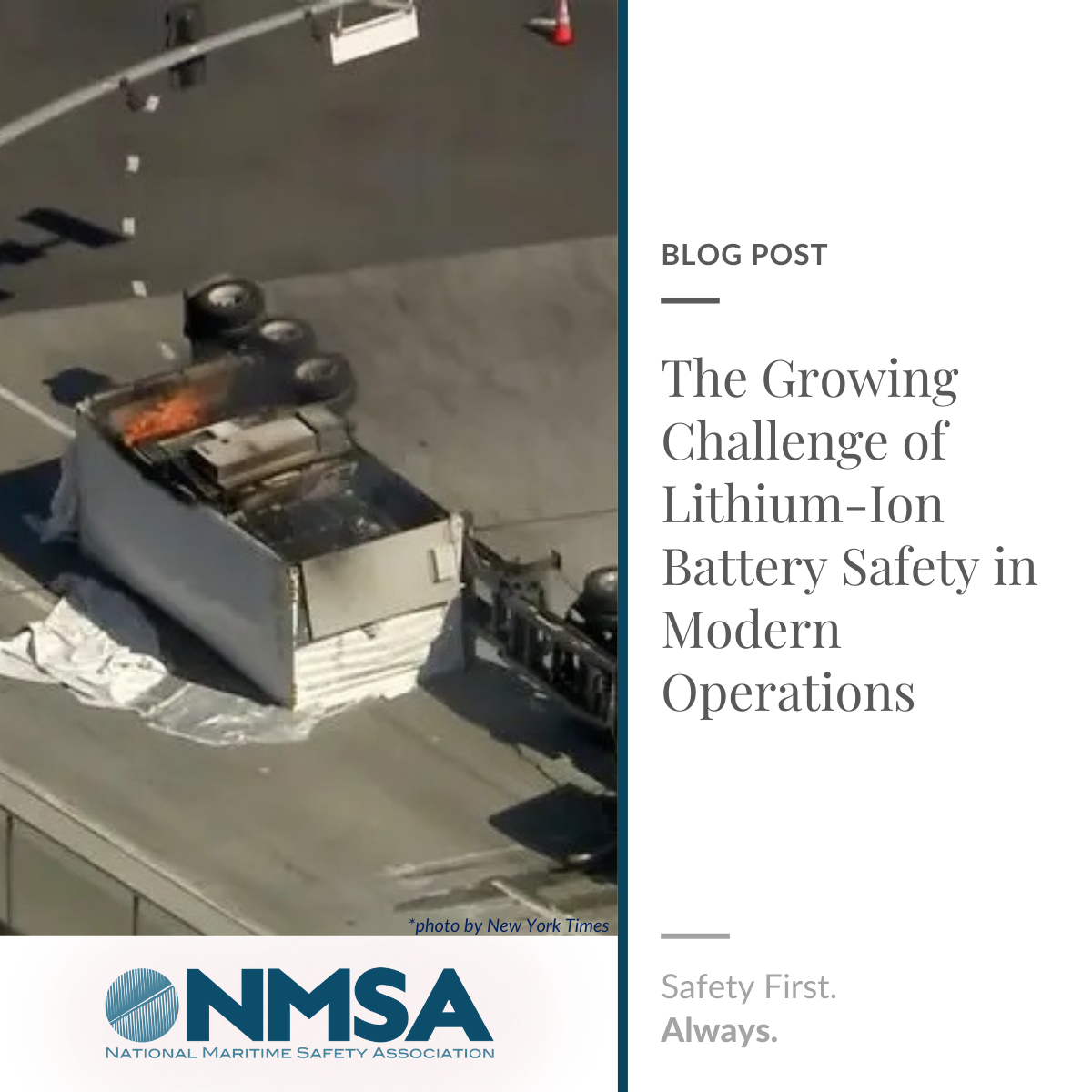
The use of lithium-ion batteries to power modern technology is on the rise and as the largest terminal in the Port of Los Angeles; APM Terminals Los Angeles can find these batteries at nearly every turn. On a marine terminal they can be found powering phones, tablets, devices, cars, pickup trucks, tractor trucks, straddle carriers, top handlers, over the road electric semi-trucks and fuel cell semi-trucks. They can be found in all types of cargo ranging from cars to battery energy storage systems to consumer goods to miscellaneous electronics. The use and presence of lithium-ion batteries is now ubiquitous with marine operations. This method of energy is replacing tried and true sources of energy such as lead acid batteries, gasoline and diesel engines. The risks associated with this technology continue to emerge as experience and deployment increase. In 2024, the Port of Los Angeles suffered a closure due to the roll over and failure of a battery energy storage system being transported as cargo. APM Terminals Los Angeles, along with several other terminals in the Port of Los Angeles and Long Beach, closed and evacuated, triggering crisis management plans for those terminals. This incident highlighted the need for increased attention across marine operations in Southern California and beyond. Being prepared and taking steps to mitigate risk is critical for the safety of employees, visitors and the public.
What are lithium-ion batteries?
Lithium-ion batteries are used in many products such as electronics, toys, wireless head- phones, handheld power tools, small and large appliances, electric vehicles, and electrical energy storage systems. Lithium-ion batteries are made of materials such as cobalt, graphite, and lithium along with plastics, coolant and insulating materials.
Lithium-ion batteries are rated in power (flow rate) such as kilowatts and in energy (size) such as kilowatt-hours. This is described in detail here.
Are there any risks associated with lithium-ion batteries?
Lithium-Ion batteries pose many risks which include:
Weight
These batteries are designed to be dense and thus the weight will be heavy relative to the size. Weight varies by design and chemistry but can be from 6-15 kg/kWh. Batteries in cargo containers can be very heavy and may exceed the capacity of pool chassis.
Chemical Risks
Lithium-ion batteries can contain flammable solvent such as ethylene carbonate or dimethyl carbonate to allow lithium-ion movement. They may also contain coolant, and larger batteries may have fire extinguishing medium. These chemicals can cause acute injury or result in health problems if inhaled or ingested.
Electric Shock
Lithium-ion batteries are designed to hold an electric charge. In order to maintain the health of the battery, a charge must be maintained at all times. When handling or working around the batteries, exposed parts should be treated as energized where contact could result in electric shock or burns.
Fire and Explosion
Lithium-ion batteries store a lot of energy in a small amount of space. When that energy is released in an uncontrolled manner, it generates heat, which can turn certain internal battery components into flammable and toxic gases. Lithium-ion battery fires happen for a variety of reasons, such as physical damage (e.g., the battery is penetrated or crushed or exposed to water), electrical damage (e.g., overcharging or using charging equipment not designed for the battery), exposure to extreme temperatures, and product defects.
Ways to Prevent Injury and Illness
Larger lithium-ion batteries may require material handling equipment, such as hoists and cranes, powered industrial trucks and special OEM equipment. Pre-planning of lifts and placement is important to reduce the risk of strains and sprains. Dropping heavy batteries can result in potential foot injuries and safety protective footwear needs to be considered when handling lithium-ion batteries.
Batteries in cargo containers may be too heavy for chassis and may require the use of Low-Boy or tri-axle chassis to transport safely.
Batteries that are damaged, punctured or otherwise opened can result in a release of the chemical solvents contained within them. These liquids should be handled like other flammable spills. The safety data sheet should be consulted for proper personal protective equipment and spill clean-up procedures.
Lithium-ion batteries can hold low and high voltage charges, and only qualified and trained electrical workers should handle live electrical equipment. Handling live electrical equipment should be done using electrical personal protective equipment such as insulated tools and gloves and electrically rated garments. Electrical work involving lithium- ion batteries should be done following NFPA 70E.
The primary risk from a damaged, punctured or otherwise opened battery is fire and explosion from thermal runaway. Thermal runaway is a dangerous, self-accelerating process where increasing temperature causes reactions that generate even more heat, leading to an uncontrollable rise in temperature, often resulting in fires, explosions, or device failure.
It is important to note that lithium-ion batteries will self-generate heat and oxygen during a thermal runaway event. The battery has the potential to violently release flames, heat and hydrogen gas. The severity of the release will depend on the battery chemistry, the size of the battery, the charge of the battery and the type of damage. Even small batteries used in cell phones when damaged can result in a severe enough release to cause burns.
Can we prevent thermal runaway?
There are many conditions that can result in thermal runaway, but can we prevent it entirely? Battery quality issues can result in battery failure. When purchasing larger lithium-ion batteries, purchasing from reputable battery manufacturers is important to reduce risk of quality issues. Thermal runaway incidents have occurred due to quality issues associated with low-cost batteries and inferior battery management systems.
Battery damage is the most common cause of thermal runaway. Dropping, striking or otherwise damaging batteries can cause electrical shorts which can result in heat generation that can be spread throughout the entire battery system. Lithium-ion batteries should be handled with care and inspected before moving for any damage. Any damage should result in a secondary inspection using a thermographic camera or other heat measuring instrument. If battery exhibits excessive temperatures, it should be isolated away from operations and other combustible materials.
Where batteries are positioned or used, they should be protected from physical damage. Barriers, bollards or other means should be used to prevent equipment from damaging batteries.
How to store lithium-ion batteries
Battery storage inside buildings has code implications. Local building codes often treat batteries similar to a hazardous material and will have restrictive code requirements including segregation, fire protection and construction requirements.
When batteries are stored in containers, segregating the container from other combustible cargo can prevent the spread of a fire should one occur.
Battery Energy Storage Systems As Cargo
Battery Energy Storage Systems (BESS) are container sized lithium-ion battery systems used for utility-scale energy storage and electrical system reliability. These BESS containers often look like any other container. They are usually heavy (can weigh in excess of 50 tons) and can be top-heavy. BESS have all the risks of lithium-ion batteries however, the primary risk related to this cargo for stevedores is thermal runaway from damage. Once thermal runaway has started on BESS cargo, existing fire responders’ protocol may be to let it burn out which can take anywhere from days or weeks.
Methods to reduce the frequency and severity of BESS thermal runaway failures include (these are risk-based and may not all be available to every location):
-
Obtaining safety information prior to BESS arrival including (1) safety data sheet (2) OEM emergency plan (3) emergency response contact name and phone number (4) verified battery “state of charge” not to exceed 30% (5) certification “state of charge” is lowest level recommended by manufacturer (6) certification battery passed UN 38.3 tests for overcharge and (7) certification the units have no loose parts or unsecured materials inside.
-
During cargo movement only move using a bombcart or other high capacity/low center of gravity transport (do not move using chassis). Transport slow and steady like any other high center of gravity load. Store in yard with distance between each container (i.e. one slot between BESS. Stack only one high. Fire department access to storage location.
-
Load BESS only on low-boys or other high-capacity chassis. Always follow OEM recommendations for customer transport.
Emergency Response
Battery failure resulting in thermal runaway can release heat, flames and toxic gasses. There is no existing protocol for non-professionals to suppress a thermal runaway of medium sized and larger lithium-ion batteries and persons should stand clear and maintain a position upwind of any thermal runaway. The Emergency Response Guidebook guides of 138 & 139 describe emergency responders positions.
Emergency responders will need to know about the presence of lithium-ion batteries. The facility emergency action plan should include where lithium-ion batteries are present and the sizes. Emergency responders should be provided this information and shown where they are located.
Current fire suppression techniques using dry chemical, gasses, foam or water spray do not seem to be effective in suppressing lithium-ion battery fires. Emergency responders may use high volume of water or may chose to allow fire to burn itself out.
Summary
The use of Lithium-ion batteries is widespread and growing. They pack a lot of energy in a small space and when that energy is released, it results in a high risk for injury and damage. It is critical to identify your risks and put in plans to reduce the risk of damage and minimize the impact if damage occurs. Coordinate response with your local emergency responders and understand what they will do in an emergency.
##
The views expressed in this blog are solely those of the author and do not represent the opinions or endorsements of any organization or entity. Readers should use their own discretion and consider multiple sources of information when forming their own opinions or making decisions.
Sources
https://www.epa.gov/system/files/documents/2023-09/Lithium-Ion-Batteries-Fact-Sheet-8-2023.pdf
https://storagewiki.epri.com/index.php/Energy_Storage_101
https://www.nfpa.org/education-and-research/home-fire-safety/lithium-ion-batteries
https://www.nfpa.org/codes-and-standards/nfpa-70e-standard-development/70e
https://ul.org/research-updates/what-is-thermal-runaway/
https://www.phmsa.dot.gov/sites/phmsa.dot.gov/files/2024-04/ERG2024-Eng-Web-a.pdf
https://www.phmsa.dot.gov/sites/phmsa.dot.gov/files/2024-09/Lithium-Battery-Test-Summary-2024.pdf